● SK chemicals Lands World’s Third, Korea’s First Go-Ahead For Cell Cultured-Based Influenza
Vaccine
- Andong City’s L House Makes Immediate Response for Disease Outbreak Possible
- Production Time of Cell Cultured-Based Vaccine Less Than Half that of Fertilized Chicken Egg-Based
Formula
- Quadrivalent Vaccine Now in Clinical Trial, Anticipated to Become First Ever
CEO Park of SK chemicals announced on the 26th that Korea’s first ever cell cultured-based influenza vaccine, Sky Cell Flu, has been approved for production from the Korean FDA. This marks the third case worldwide, following Novartis and Baxter, of an influenza vaccine being authorized for commercial use.
The vaccine is produced using an animal cell-based virus strain instead of a strain from fertilized chicken egg cells, which allows adequate supplies to be produced in the event of a virus outbreak within two months rather than the five to six months required when using fertilized chicken egg cells.
The arduous five months it took for the production and circulation of the vaccine following the reception of the vaccine viral strain supplied by the World Health Organization(WHO) during the 2009 pandemic involving the new strain of type-A influenza(H1N1) has now been reduced by more than half.
Expedient, large-scale vaccine production is now possible and no longer dependent on the supply of fertilized chicken eggs. This new formula is immune to any external contamination, such as bird flu, and is widely expected to become the preferred method for the next generation of emergency vaccine production.
The U.S. Department of Health and Human Services (HHS) contributed approximately KRW 500 billion to Novartis for the construction of facilities (completed in 2012) required for cell culturing required in the production of influenza vaccines to be used in the event of a disease outbreak. The HHS also formally supports the influenza vaccine facilities of Japan-based pharmaceutical company Daiichi Sankyo.
Following recovery from the pandemic brought on by the new strain of influenza type-A(H1N1), the Korean government officially assembled the Transgovernmental Enterprise for Pandemic Influenza in Korea (TEPIK) to cover all bases for developmental research and vaccine production in the event of an outbreak such as the bird flu or other unpredictable, mutating virus-based pandemics.
In search of solidifying a domestic base for vaccines, SK chemicals top management officials began seeking a definitive investment in the midst of the possible risks of long-term development in 2008 and consequently were able launch the development of premium serums including cell cultured-based influenza vaccines. Year 2011 marked the collective beginning of increased efficiency in cell cultured-based vaccine development accompanied by TEPIK, an affiliate of the Ministry of Health and Welfare.
The Ministry of Trade, Industry and Energy along with the North Gyeongsang Province and Andong City governments facilitated the construction of a home base for vaccine production following their designation of SK chemicals as the key player in ‘custom vaccine (such as influenza) production’ to fulfill the necessary groundwork for the production of cell cultured-based vaccines.
In 2011, SK chemicals began construction of a production home base within Andong’s North Gyeongsang Province Bio Industrial Complex, and with the momentum gained from supporters such as the Korean FDA funded ‘Public Campaign Group for the Commercialization of Vaccines’ last August, the aforementioned ‘home base’ was christened as what we know today as the L House following the GMP (Good Manufacturing Practice) stamp of approval.
CEO Park clarified on the necessity of cell cultured-based vaccines saying, “The capacity to produce an emergency vaccine during a pandemic is directly involved in guaranteeing the nation’s security.” He also commented on the significance of the recent authorization of cell cultured-based vaccines stressing that it was the result of a multi-collaborative movement to make Korea an authority in the vaccine sector and involved the Ministry of Health and Welfare, the KFDA and the Ministry of Trade, Industry and Energy along with the North Gyeongsang Province regional government and the government of Andong City.
Meanwhile, clinical trials are currently underway for the world’s first quadrivalent vaccine. A quadrivalent vaccine is the next generation of vaccines that possess the ability to simultaneously protect against four different strains of viruses and together with the continued development of trivalent vaccines as well, SK chemicals is on the way to dominating the global market.
The successful development of the first Korean tech-based anti-cancer agent, heptaplatin, in 1999 placed SK chemicals at the eleventh spot among countries recognized for medicinal development. The first medicinal originating from a natural substance, Joins Tab, and other products such as the 13th domestic-based product, Mvix, gave SK chemicals the upper hand in leading the medicinal R&D industry. Thanks to the recent development and approval of cell cultured-based influenza vaccines, SK chemicals is earning a global reputation as Korea’s definitive, biotech leader.
[Caption]
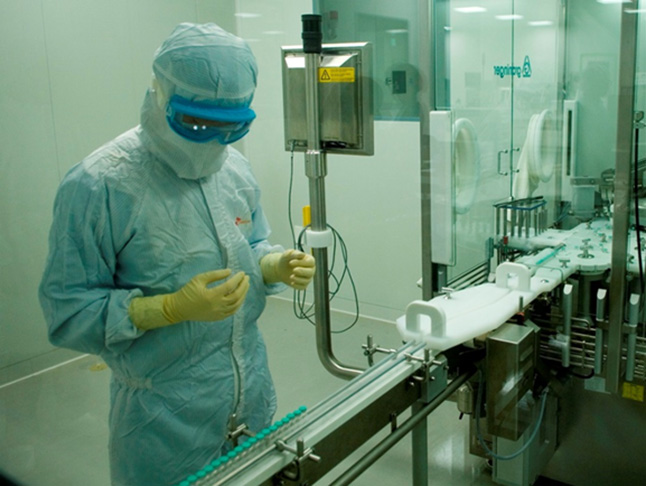
Vaccine production is in full swing at the L House, which is standardized as the nation’s first cell cultured-based vaccine production facilities for both R&D and outbreak emergency response.
